
Are you currently dealing with a positive test result from a private well or a public water notice?
Coliform bacteria are
:a broad group of microorganisms found in the environment, including soil and vegetation, as well as in the intestines of warm-blooded animals and humans. While most coliforms do not cause disease, they serve as critical “indicator organisms” in water and food testing; their presence suggests that a system may be contaminated by other harmful pathogens like viruses or parasites.
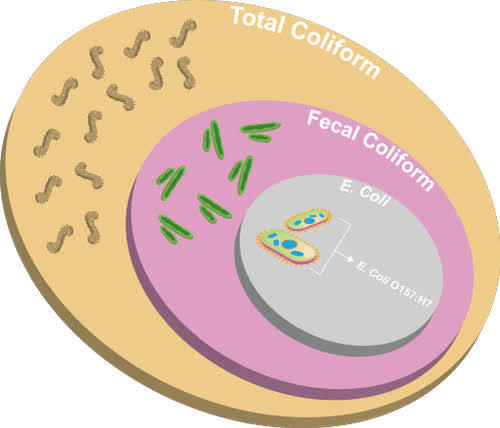
Types of Coliform Bacteria
The coliform group is categorized into three levels of increasing health concern:
- Total Coliform: The broadest group, found naturally in soil and surface water. Their presence in drinking water indicates a breach in the system, though they are usually harmless to healthy individuals.
- Fecal Coliform: A subset of total coliform that originates specifically in the gut and feces of warm-blooded animals. Their presence indicates a higher risk of recent contamination from waste.
- Escherichia coli (E. coli): A specific species within the fecal coliform group. Most strains are harmless, but its presence is a definitive indicator of recent fecal pollution and the likely presence of dangerous pathogens.
Common Health Effects
Exposure to harmful strains or associated pathogens in contaminated water can cause gastrointestinal distress.
- Acute Symptoms: Nausea, vomiting, abdominal cramps, diarrhea, fever, and fatigue.
- High-Risk Groups: Infants, the elderly, and those with weakened immune systems are more susceptible to severe or fatal complications.
- Severe Strains: Specific strains like E. coli O157:H7 can lead to serious conditions such as kidney failure (hemolytic uremic syndrome).
Testing and Response
Because coliform bacteria are odorless and tasteless, testing is the only way to detect them.
- Testing Frequency: Experts recommend testing private wells at least once per year, ideally in late spring or early summer when runoff is highest.
- Immediate Action: If coliform is detected, you should bring water to a rolling boil for at least one minute before drinking or cooking.
- Well Water Treatment
